
Issue 56 - Looking for Monsters
Slowing down


The water was raven black. As I drove by the lake road, my eyes kept trying to look at the water, less than 3 meters away. It was deep. I had this weird feeling of wanting to get drawn into it. To see what’s underneath the surface.
Near the parking at Dores Beach, at the northern tip of Loch Ness, stands an old camper van with the sign “Nessie-ser Independent Research”.
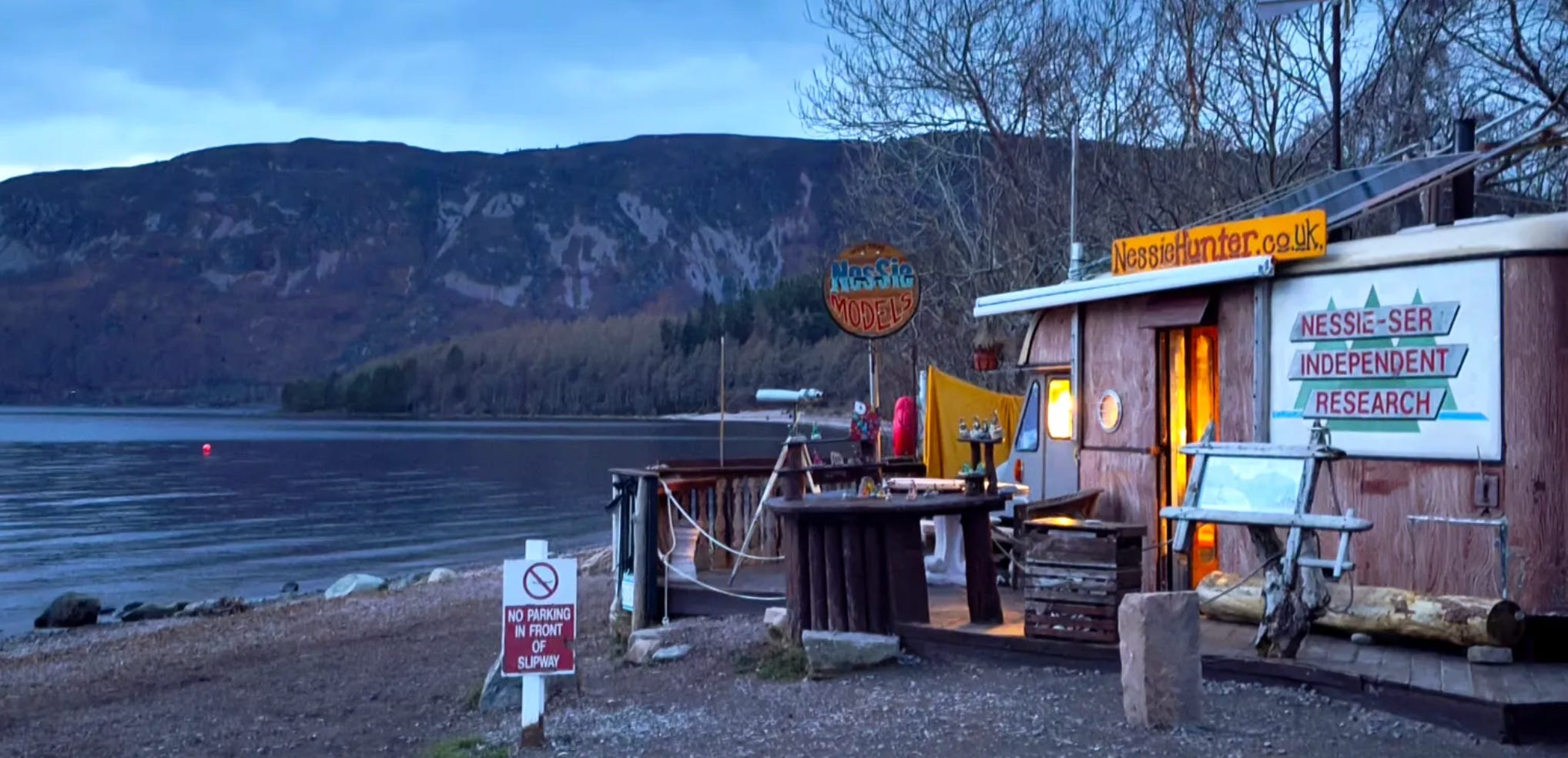
Steve Feltham dedicated his whole life to searching for the monster. He left his wife, his work, and his home along the way. Like a famous ring, such a myth drives human nature crazy. Something about it makes you feel half fearful, half fascinated.
I could feel this while driving back home, watching the dark water, the size of the lake, and knowing that generations have been looking for Nessie.
Back home, I look at my terminal. There too, the dark navy tint makes me wonder. What’s the next prompt? The next output?
Things are different there lately. Code was a difficult craft. It was half feared, half fascinating. It still is, but the monster changed face. The fear, the magic, still remain, but the interface changed. The old playbook of writing code that only a percent of the population could understand is now a grimoire that everyone can use to spell instructions in natural language.
LLMs unfolded the central object. Code, the monster, was partly a story carrying something larger underneath.
At the time of writing this, we are underwater. Drawn below the surface by the monster we just found. We just created.
The internet brought the problem of how to make sense of infinite knowledge, how to curate an infinite collection? LLMs provided the solution. Now we are asking ourselves: how do we make sense of infinite curation?
This is our next monster. It seems pretty big, pretty deep under the unclear water.
After a few weeks of “tokenmaxing”, a naive attempt at capturing the monster, we are starting to uncover that next monster.
I feel it, some of us too: yes, we are slowing the fuck down.
To me, it started with friction as the main driver. Sometimes I need more. Sometimes I need less. Judging when to have more or less is basically an act of mental proprioception: “feeling when your state of mind has the right shape for generating valuable thoughts and solving the problems in front of you, or when your mental posture is wrong”.
Mental proprioception is something to train. You cannot just wake up and have it. Like a ballerina who knows whether a move feels right or not in her body, it takes years. That is a form of “taste” if you prefer.
So indeed the question is: how do we build taste? Or put it in another way: what’s the definition of “good” to us?
Maybe that is what I am really trying to say here. I don’t feel LLMs killed the mystery, or that code lost all of its magic, but more that we are small creatures constantly looking for meaning, and mystery is one of the ways we do it.
Now that execution is getting cheaper and cheaper, I feel less interested in the performance of power than in the conditions that still make something feel real.
Slowness. Paper. Music. Wondering. Friction. Sometimes more, sometimes less.
Good, to me, is still something fun, nostalgic in the way it will be remembered, heavy, and made on purpose.
Maybe that is why Loch Ness remains black enough to hold. Not because it hides a creature for sure, but because it still leaves room for one. And maybe the next monster is not only out there, waiting under the surface for another name, another sighting, another generation to go looking.
Maybe it is already here, taking shape more quietly, in the life we are arranging around these tools, which did not drain the lake so much as teach us to see depth again.
📡 Expected Contents
The Wrong Kind of Bubble
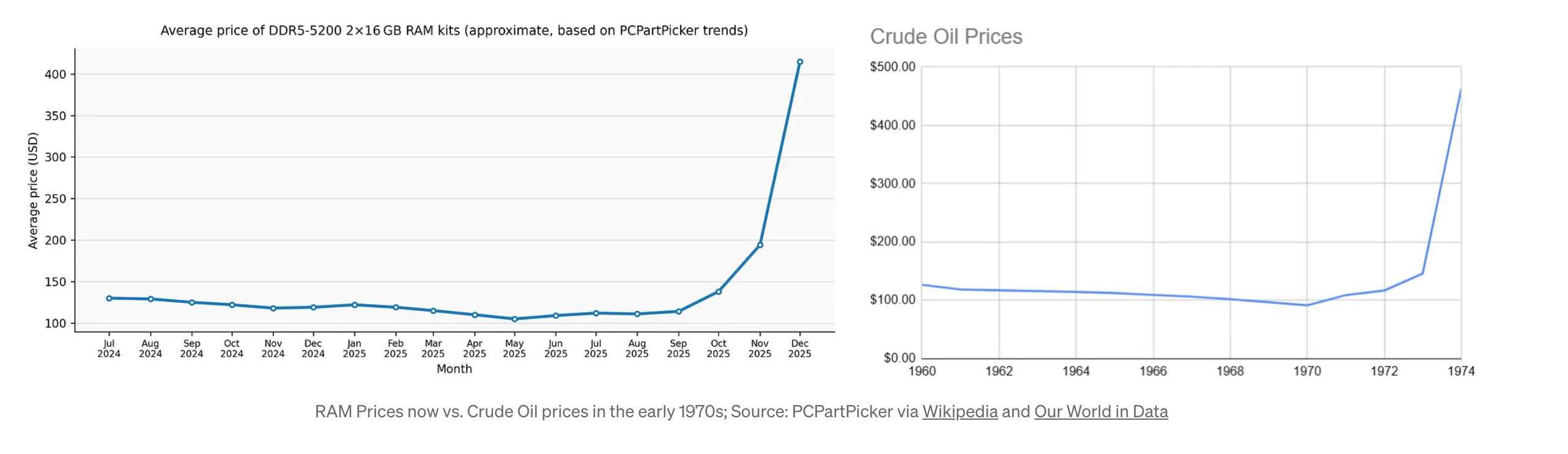
Intelligence, or rather inference, has a case for being the new cheap input. Once inference moves to the edge, it actually can be cheap — zero marginal cost. And so, the most important question of our era is this: What is the invention that will truly unlock the value of this input? So far, the industry has tried to churn out AI laptops, “pins”, pendants and soon earbuds. These are attempts to squeeze a new input into the logic of the existing technology, e.g. microprocessors in calculators, washing machines and automobiles in the 1970s or the “horseless carriage” from the 1890s.
Probably one of the best piece of economics I read since the beginning of the year. Lots of ideas that resonate with the current craziness we all go through.
In that sense, AI is the wrong kind of bubble, but still a necessary one to liberate capital chasing the wrong ideas.
Somewhere, someone has figured out what the light bulb was for electricity - but for LLMs. If that’s you, please reach out.
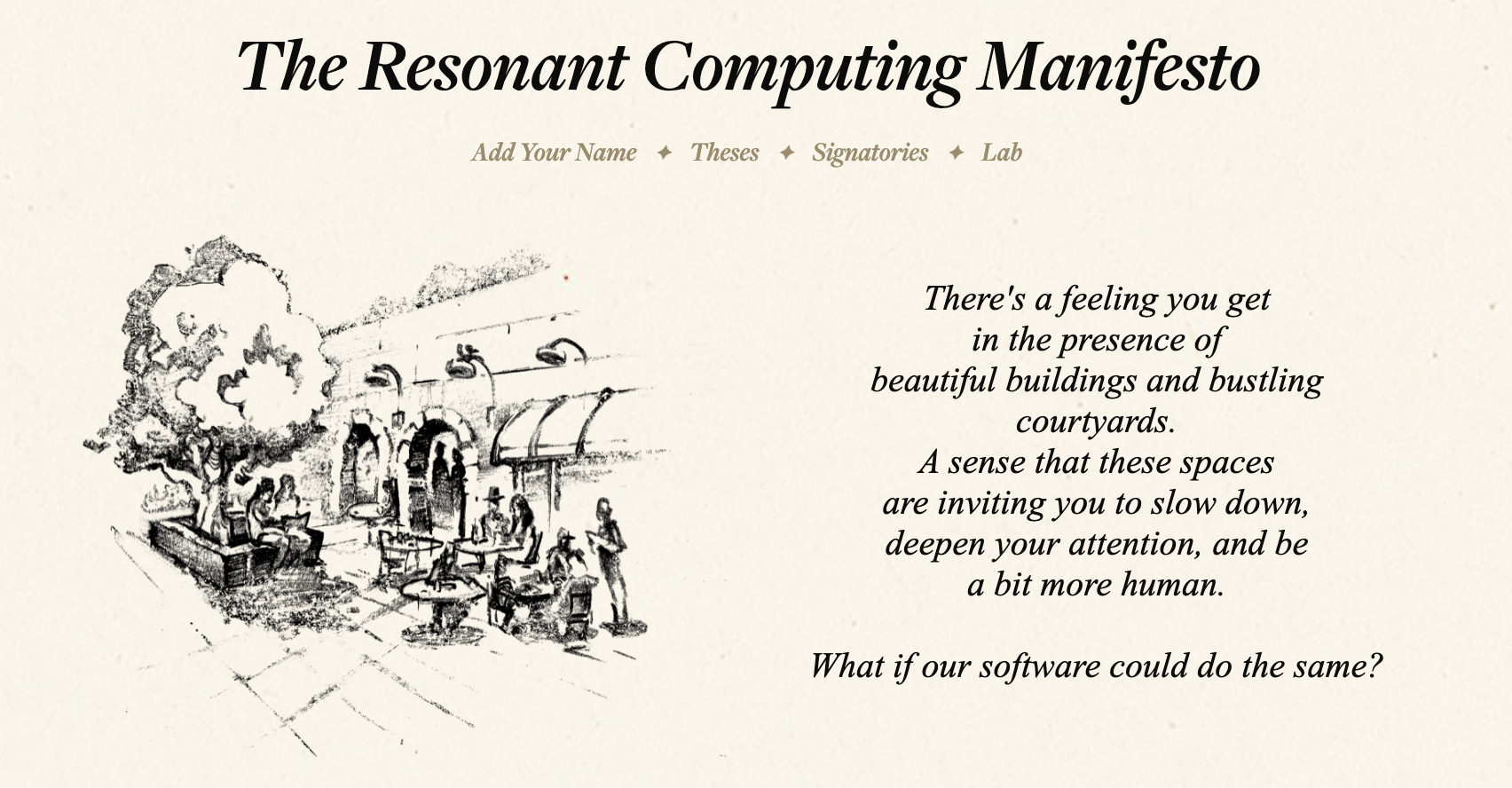
The Resonant Computing Manifesto
When people like Maggie Appleton, Samuel Arbesman or Simon Willison unite to define what should be software, you get a thoughtful manifesto.
Worth reading in a calm space, with a quiet mind.
If I had to recommend a set of skills.md
Over the last months, I went here and there, finding or building skills.md. I still have thoughts around my experience with Math Driven Spec., but for everyday life I keep coming back to Matt Pocock skills. As described they are “designed to be small, easy to adapt, and composable. They work with any model. They’re based on decades of engineering experience.”
Scent, In Silico
The five senses are sight, hearing, smell, taste, and touch. So far, the recent technologies we have built are focused on sight and hearing. Evolution got us to focus on these, so there is nothing illogical about that. But in a world where rationality is the way to think, our emotional brains could be better off with signals from our other faculties. Smell could be one of them.
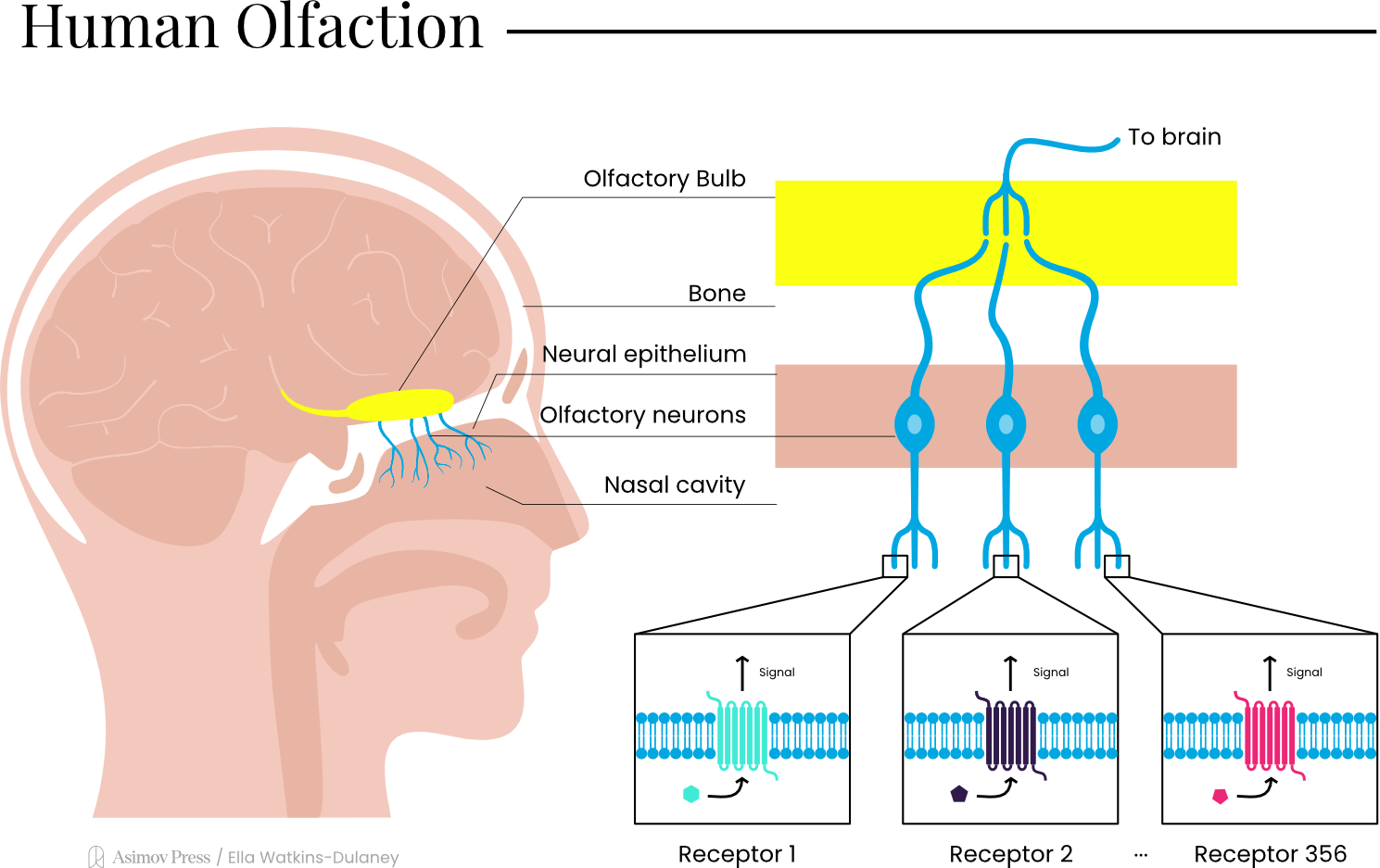
📰 The Blog Post
Wrote this a month ago, and most of it stays true. Just moved away from OpenClaw to Hermes. Definitely less buggy, and the auto-improvement mechanism is a welcome addition.
Other than that I keep reaching out to Alfred - especially when I want to focus on what I am doing right now and I can delay the information to come on my screen.
🎨 Beyond The Bracket
If the Andromeda Galaxy were brighter, this is what you would see every night.1

I naturally slow down the writing schedule here. Not really on purpose. The amount of news is so important that yes, it feels right to slow the fuck down. Doing so already.
Feel free to unsubscribe if you expect weekly digests, or see these issues as a way to keep on top of everything. It is not 😉
Where I am not slowing: taking time to eat good food and drinks (invested a nice coffee machine recently), having good furniture (invested into a HumanScale office chair), being reverse-prompted by LLMs2 (people have TikTok or Netflix addiction, this is mine) and scramble weird ideas on paper (I might run another try on the Math Driven Spec idea).
Also summer is heading, and so the call for slowing down feels right.
I’m eager to be in New York and near Portland during July, and in Salt Lake City and the Cornwall during August.
Feel free to reach out if you want to take a drink!
https://claude.ai/share/29cc858e-162e-4e0b-8b9a-f867c68a7c6c
/plan mode if you prefer, but on steroid. It's especially valuable at work where I found myself writing a lot of spec. Still a lot of human in the process as I have colleagues expert in their fields. Still way better for extracting sharp ideas and clarifying edge cases
Very poetic this time, loved it!
Nice one. I like the way you structured it!